7 Cozy Blackout Curtains for Your Dreamy Bedroom Sanctuary
Disclosure: As an Amazon Associate, I earn from qualifying purchases. This post may contain affiliate links, which means I may earn a small commission at no extra cost to you. I only recommend products I genuinely think could help you create a cozier home.
How to use this guide: Recommendations describe product types and buying considerations, not hands-on tests of a specific model. Search links show matching options in Australia and the US. Check the seller’s dimensions, materials, instructions and current pricing before buying. See our editorial approach.
The difference between blackout curtains bedroom that actually work and ones that leave you squinting at 6am streetlight glow? It comes down to fabric weight, lining quality, and how well they fit your windows. If you’re a light sleeper, shift worker, or simply someone who treasures that pitch-dark cocoon feeling, the right thermal curtains transform your cosy bedroom into a genuine sleep sanctuary.
Quick Takeaways
- Eyelet blackout curtains offer the easiest installation and smoothest glide for daily use
- Thermal lining adds insulation value—keeping rooms warmer in winter and cooler in summer
- Linen-blend options provide softer light filtering with a more relaxed, textured aesthetic
- Measure 15-20cm beyond your window frame on each side for maximum blackout curtains privacy bedroom coverage
- Darker colours typically block more light, but quality triple-weave fabrics work well in lighter shades too
What Makes Blackout Curtains Actually Work?
True blackout curtains block 99% or more of incoming light through tightly woven fabric or specialised coating. The magic happens in the weave: quality options use a triple-weave construction or foam-backed lining that stops light at the fibre level. This isn’t just about sleep—blackout curtains privacy bedroom benefits mean neighbours can’t see your silhouette moving around at night, and your TV screen won’t compete with afternoon glare.
Beyond light control, thermal curtains create an insulating barrier. According to the U.S. Department of Energy, medium-coloured curtains with white plastic backings can reduce heat gain by up to 33%. That translates to a cosy bedroom that stays comfortable without constantly adjusting your thermostat.
How to Choose the Right Blackout Curtains for Your Bedroom
Start with your priorities: complete darkness, energy efficiency, or aesthetic appeal. You can have all three, but knowing which matters most helps narrow options quickly.
Measuring for Maximum Coverage
Light gaps around curtain edges defeat the purpose entirely. Measure your window width, then add 15-20cm on each side. For height, mount your rod 10-15cm above the window frame and let curtains puddle slightly or hover 1cm above the floor. This creates that wraparound coverage that keeps streetlights and early sunrises where they belong—outside.
Fabric Weight and Texture
Heavier fabrics hang better and block more light, but they also trap more heat. If your cosy bedroom runs warm, look for breathable options with foam backing rather than thick velvet. The texture you see from inside matters too—some blackout curtains look plasticky, while others have a soft, woven face that blends with your decor.
#1 Best Everyday Pick for Cosy Bedrooms: Blackout Curtains Eyelet
Best for: Easy installation and daily use | Why we picked it: Smooth glide and modern aesthetic
If you want curtains that open and close without drama, eyelet (grommet) styles deliver. The metal rings slide effortlessly along standard rods, creating those satisfying uniform folds that look intentional rather than fussy. These suit renters who can’t modify windows and anyone who adjusts their curtains multiple times daily.
- ✓ Glides smoothly without snagging or bunching
- ✓ Creates even, contemporary pleats automatically
- ✓ Works with most standard curtain rods
- ✗ Ring diameter limits rod style choices
Bottom line: Ideal for anyone prioritising ease of use over formal aesthetics. Check the retailer for current pricing; per panel, making them an accessible starting point for blackout curtains bedroom upgrades.
Browse matching options on Amazon AU · Browse matching options on Amazon US
#2 Best for Energy Savings: Thermal Lining Curtains
Best for: Insulation and year-round comfort | Why we picked it: Noticeable temperature difference
These earn their keep in older homes with drafty windows or any bedroom that faces the afternoon sun. The thermal backing—usually a white or silver layer bonded to the fabric—reflects heat in summer and retains warmth in winter. You’ll notice the difference standing near the window: less radiant heat on sunny days, fewer cold drafts in January.
- ✓ Reduces heating and cooling costs measurably
- ✓ Provides excellent noise dampening as a bonus
- ✓ White backing maximises heat reflection in summer
- ✗ Thermal layer adds weight and bulk
Bottom line: Worth the investment if your energy bills spike seasonally or your cosy bedroom sits against a poorly insulated wall. Expect to pay (check current retailer pricing) per panel for quality thermal curtains that actually perform.
Browse matching options on Amazon AU · Browse matching options on Amazon US
#3 Best for Soft Aesthetics: Linen Blend Curtains
Best for: Relaxed style with gentle light filtering | Why we picked it: Beautiful texture without heavy darkness
Not everyone wants cave-like darkness—some of us just need to soften that harsh morning glare. Linen blend curtains diffuse light beautifully, creating a warm glow rather than complete blackout. They suit bedrooms where you want privacy without sacrificing that airy, lived-in Scandinavian feel. The natural slub texture adds visual interest that plain polyester simply cannot match.
- ✓ Soft, organic texture that photographs beautifully
- ✓ Breathable fabric won’t trap heat in summer
- ✓ Pairs well with other natural materials like wood and rattan
- ✗ Filters light rather than fully blocking it
Bottom line: Perfect for light sleepers who still want some ambient morning glow, or south-facing rooms where complete darkness isn’t the goal. Budget (check current retailer pricing) per panel for genuine linen-blend quality.
Browse matching options on Amazon AU · Browse matching options on Amazon US
#4 Essential Hardware: Curtain Rod Set
Best for: Complete installation without extra trips | Why we picked it: Everything you need in one box
Even the best blackout curtains bedroom picks fail if they’re hanging from a wobbly rod. A complete set includes the rod, finials, brackets, and mounting hardware—no surprise hardware store runs. Look for adjustable width rods that telescope to fit your window, and choose a weight rating that matches your curtain fabric. Heavier thermal curtains need sturdier support than sheer panels.
- ✓ Includes all mounting hardware for quick setup
- ✓ Adjustable length fits most standard windows
- ✓ Matching finials create polished, finished look
- ✗ May need wall anchors for plaster or drywall
Bottom line: Don’t skip the hardware—a sturdy rod makes opening and closing curtains feel effortless for years. Check the retailer for current pricing; for a quality set that supports blackout-weight fabrics.
Browse matching options on Amazon AU · Browse matching options on Amazon US
Styling Your Blackout Curtains for Maximum Cosy Appeal
Dark curtains don’t have to make your room feel smaller or gloomier. The trick lies in layering and proportion.
Hang your rod as close to the ceiling as possible—this draws the eye up and makes standard ceilings feel taller. Let curtains pool slightly on the floor (2-3cm) for a luxurious, intentional look, or keep them hovering just above for easier cleaning. If your blackout curtains feel too heavy visually, add a sheer layer underneath for daytime softness. You get the best of both worlds: filtered natural light during waking hours, complete darkness when you need it.
For a cohesive cosy bedroom, echo your curtain colour somewhere else in the room—a throw pillow, lampshade, or reading nook blanket creates visual harmony without matching everything exactly.
Common Blackout Curtain Mistakes (and How to Avoid Them)
The most common mistake is undersizing. Curtains that barely cover the window frame let light leak around every edge, defeating your blackout curtains privacy bedroom goals entirely. Always buy wider and longer than you think you need—you can hem length, but you can’t add fabric.
Second: ignoring the gap above the rod. That strip of exposed wall between rod and ceiling lets morning light stream in like a nightlight. Mounting higher solves this instantly. Finally, don’t forget the sides—if your window sits close to a wall, consider a wraparound rod that curves panels toward the wall to eliminate side gaps.
| Product | Best For | Key Feature | Ideal Room | Check Price |
|---|---|---|---|---|
| Blackout Curtains Eyelet | Easy daily use | Smooth grommet glide | Master bedroom | Browse matching options on Amazon AU · Browse matching options on Amazon US |
| Thermal Lining Curtains | Energy efficiency | Heat-reflective backing | Drafty bedrooms | Browse matching options on Amazon AU · Browse matching options on Amazon US |
| Linen Blend Curtains | Soft aesthetics | Natural texture | Guest bedroom | Browse matching options on Amazon AU · Browse matching options on Amazon US |
| Curtain Rod Set | Complete installation | All hardware included | Any bedroom | Browse matching options on Amazon AU · Browse matching options on Amazon US |
Frequently Asked Questions
What are the best blackout curtains for bedroom privacy?
Eyelet blackout curtains with triple-weave fabric offer the best combination of light blocking and privacy. The dense weave prevents silhouettes from showing at night, even with interior lights on. Look for curtains labelled as blocking 99% or more of light for maximum blackout curtains privacy bedroom performance.
Do thermal curtains actually reduce energy bills?
Yes, quality thermal curtains can reduce heat loss through windows by 25-40% according to energy efficiency studies. The insulating layer creates an air barrier that keeps conditioned air inside. You’ll notice the biggest difference in rooms with older single-pane windows or walls that face extreme sun exposure.
How wide should blackout curtains be for full coverage?
Add 15-20cm to each side of your window frame for proper overlap. This means a 100cm window needs curtains totalling at least 130-140cm in combined width. For complete light blocking, the extra fabric wraps around the window edges and eliminates light gaps that disturb sleep.
Can light-coloured curtains still block light effectively?
Absolutely—blackout performance depends on the backing and weave, not the face colour. White or cream curtains with a foam or triple-weave backing block light just as well as navy or charcoal options. The backing does the work, so you can choose colours that brighten your cosy bedroom without sacrificing darkness.
What’s the difference between blackout and room-darkening curtains?
Blackout curtains block 99-100% of light, while room-darkening options typically block 85-95%. Room-darkening curtains filter rather than eliminate light, creating a dim ambiance instead of total darkness. For shift workers, nurseries, or anyone extremely light-sensitive, true blackout is worth the upgrade.
How do I clean blackout curtains without damaging the backing?
Most blackout curtains are machine washable on a gentle cold cycle, but always check the care label first. Avoid high heat in the dryer—it can crack foam backings or shrink thermal layers. Hanging to dry or tumbling on low heat preserves the blackout coating longest.
When is the best time to buy bedroom curtains?
Do blackout curtains help with noise reduction?
Heavy blackout and thermal curtains provide modest sound dampening—roughly equivalent to closing a window. They won’t eliminate traffic noise or loud neighbours, but they soften sounds noticeably compared to bare windows or thin drapes. For serious noise issues, consider pairing curtains with weighted blankets or dedicated acoustic panels.
Should I hang blackout curtains inside or outside the window frame?
Outside mounting is almost always better for light control. Hanging curtains inside the frame leaves gaps at the sides and top where light sneaks through. Mount your rod on the wall 10-15cm above and beyond the frame, and let curtains extend past the window edges for that complete cosy bedroom cocoon effect.
The right blackout curtains bedroom setup genuinely transforms how well you sleep—and that ripples into everything else. Whether you choose thermal curtains for their energy-saving bonus or simple eyelet panels for everyday ease, the goal is the same: a cosy bedroom that feels like a retreat the moment you close those curtains. Sweet dreams.
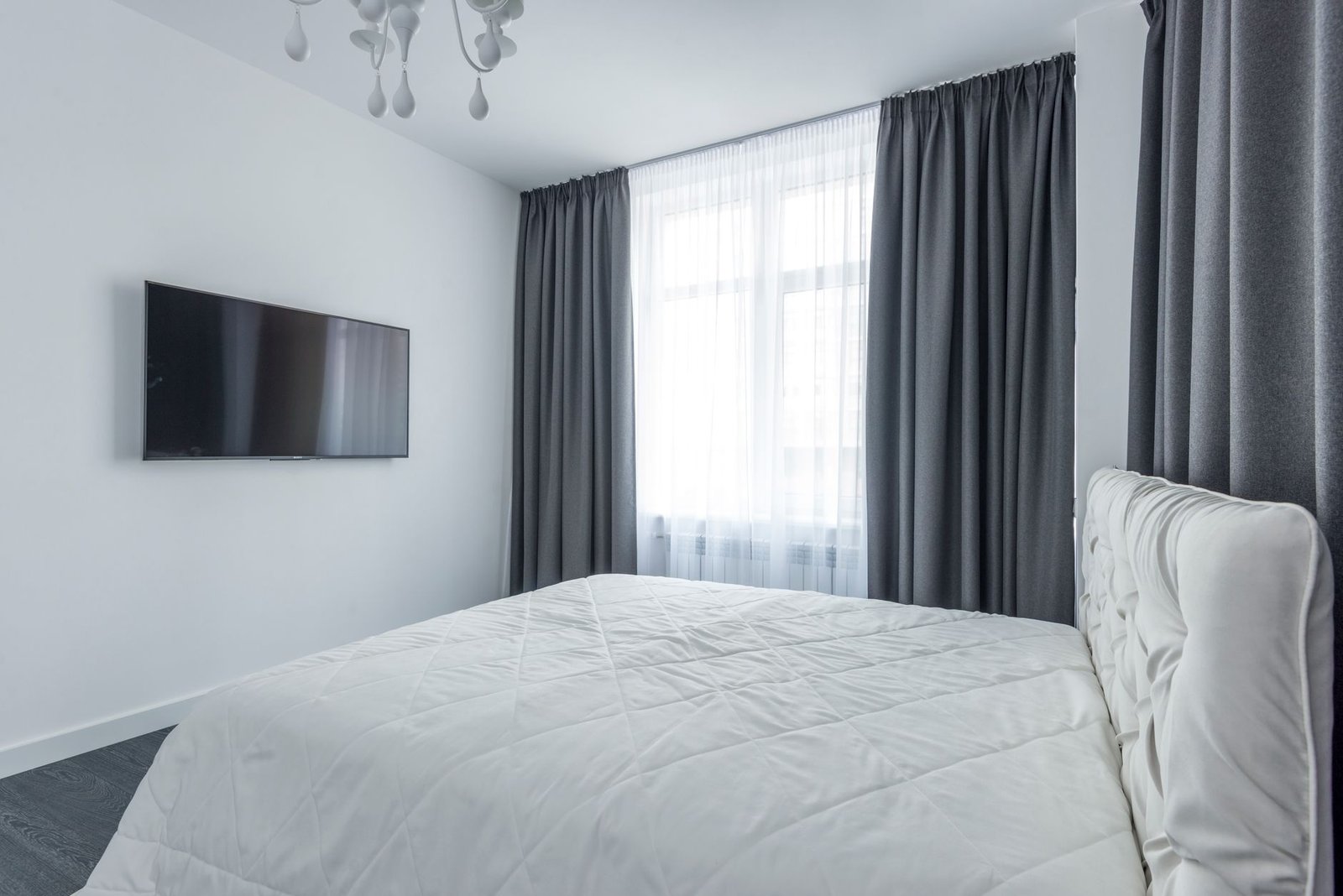
Featured image: Photo by Max Vakhtbovych on Pexels