9 Brilliant Studio Apartment Ideas for Cozy One-Room Living
Disclosure: As an Amazon Associate, I earn from qualifying purchases. This post may contain affiliate links, which means I may earn a small commission at no extra cost to you. I only recommend products I genuinely think could help you create a cozier home.
How to use this guide: Recommendations describe product types and buying considerations, not hands-on tests of a specific model. Search links show matching options in Australia and the US. Check the seller’s dimensions, materials, instructions and current pricing before buying. See our editorial approach.
Your bed stares at you while you try to work. Your desk judges you while you try to sleep. And somehow your kitchen is involved in both situations. If you’ve ever felt like your studio apartment is staging a small rebellion against the concept of separate activities, you’re not alone—and you’re not stuck with it.
The best studio apartment ideas don’t fight against the single-room reality; they work with it. The goal isn’t to pretend you have more space than you do. It’s to create visual and functional boundaries that let your brain switch gears—from sleep mode to work mode to actually-relaxing-now mode—without physically leaving the room.
Quick Takeaways: Studio Apartment Living
- Zone with furniture, not walls — room dividers, rugs, and shelf placement create mental boundaries
- Every piece should earn its space — prioritise furniture that stores, converts, or serves double duty
- Vertical space is free real estate — floating shelves and adhesive hooks keep floors clear
- Define your “rooms” by activity — a dedicated work corner, even tiny, helps you clock out mentally
- Cohesive colour keeps it calm — too many competing zones look chaotic in small spaces
Why Small Apartment Living Feels So Challenging
The core problem isn’t square footage—it’s context collapse. In a traditional home, walking into your bedroom signals “sleep time” to your brain. Walking to a home office signals “work mode.” In a studio, your brain receives no such cues. Everything happens in the same visual field, which creates a low-level stress that’s hard to name but easy to feel.
According to environmental psychology research from the American Psychological Association, our physical environment significantly impacts our ability to transition between tasks and rest states. When your workspace is visible from your pillow, true mental shutdown becomes harder.
The solution is intentional zoning—using furniture placement, visual barriers, and strategic storage to create the psychological effect of separate rooms. It won’t add square footage, but it will add sanity.
Smart Zoning Strategies for One Room Everything
Visual separation works even when physical separation isn’t possible. A bookshelf positioned perpendicular to the wall creates a “room” without blocking light. A rug under your bed area signals “bedroom” while a different texture under your desk announces “office.” These cues seem subtle, but your brain reads them.
The key is consistency. Pick your zones—sleeping, working, relaxing, eating—and give each one at least one defining element. A specific lamp. A different textile. A piece of furniture that faces that direction. Even in 400 square feet, you can have four distinct areas that feel intentional rather than chaotic.
The Three-Zone Minimum
Most studio dwellers benefit from at least three defined zones: sleep, work, and living. If you cook regularly, the kitchen becomes a fourth. Trying to blend everything into one “flexible” space sounds efficient but actually creates decision fatigue—you’re constantly negotiating with your environment instead of just existing in it.
#1 Best Zoning Solution for Small Apartment Living: Room Divider Freestanding
Best for: Creating visual privacy without permanent changes | Why we picked it: Instant “walls” that fold away when needed
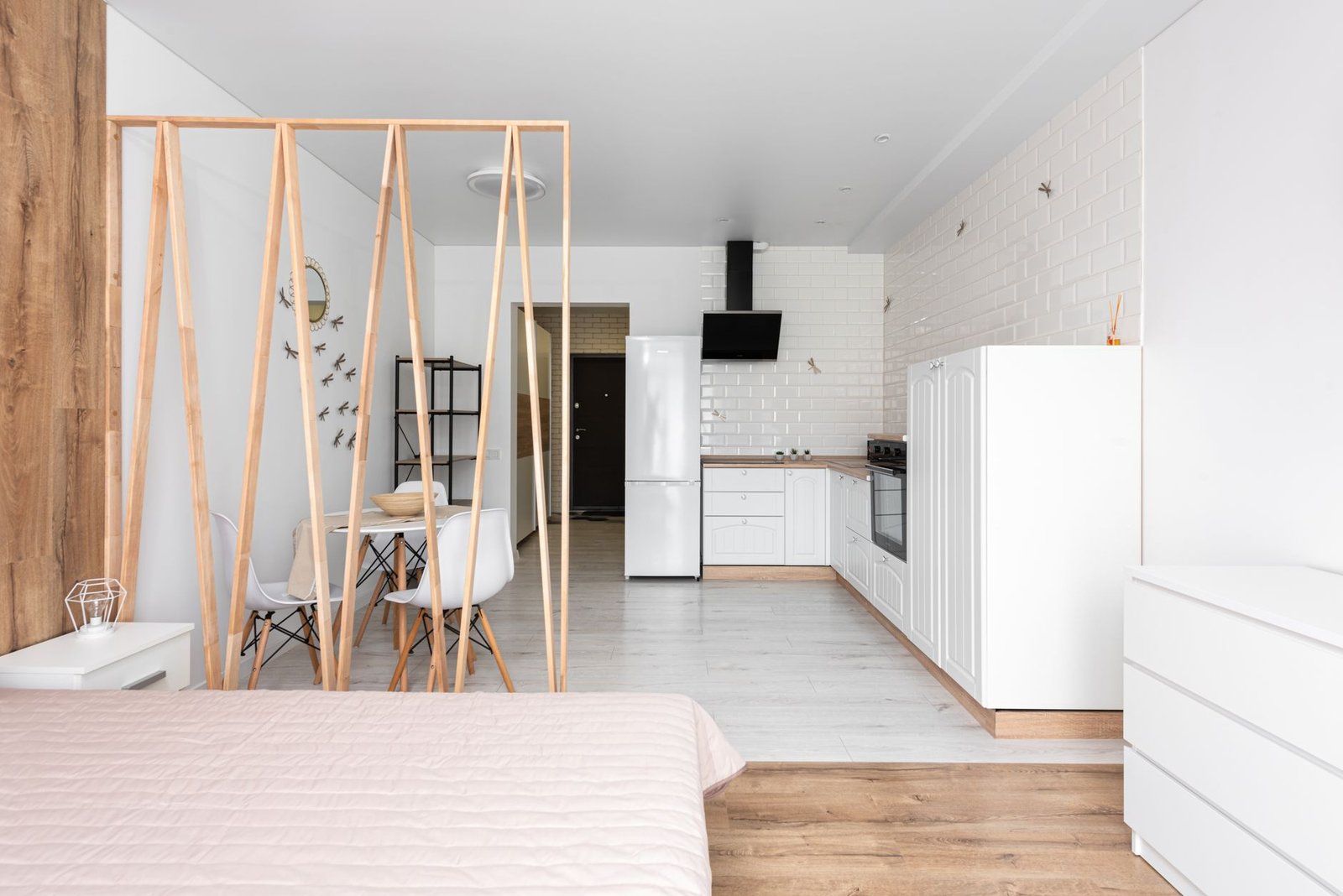
A freestanding room divider is the most straightforward way to carve a studio into zones without involving a landlord or a drill. Position one between your bed and living area, and suddenly you have a “bedroom” that guests don’t immediately see when they walk in. The psychological shift is immediate—and surprisingly significant.
Fabric-panel dividers feel softer and let light filter through, while wood or rattan options add texture and can double as a backdrop for hanging plants or string lights. For maximum flexibility, look for a folding style that can flatten against the wall when you want the full open-plan feeling back.
- ✓ Creates instant privacy without installation or tools
- ✓ Folds flat for storage when hosting larger gatherings
- ✓ Adds visual interest and texture to blank walls
- ✗ Takes up floor space—measure carefully in tight layouts
Bottom line: If your biggest frustration is the bed being visible from everywhere, a freestanding divider solves it for check the retailer for current pricing; Ideal for renters who can’t modify their space but need psychological separation between “life zones.”
Browse matching options on Amazon AU · Browse matching options on Amazon US
#2 Best Hidden Storage for Studio Apartment Decor: Ottoman Storage Bench
Best for: Concealing clutter while adding seating | Why we picked it: Furniture that works twice as hard
In a studio, visible clutter amplifies fast. One basket of laundry, a few stray blankets, and suddenly your entire living space feels chaotic. A storage ottoman absorbs all of it—extra bedding, off-season clothes, shoes you don’t wear daily—while presenting a clean, upholstered surface to the world.
Place one at the foot of your bed for a boutique-hotel look that also solves your “where do I put the extra blankets” problem. Or use it as a coffee table alternative in your living zone—add a tray on top for drinks, and no one knows there’s a small wardrobe hiding underneath.
- ✓ Hides bulky items that have nowhere else to live
- ✓ Provides extra seating when guests visit
- ✓ Works as a coffee table, footrest, or bedside bench
- ✗ Deep storage makes bottom items harder to access
Bottom line: A storage ottoman typically runs (check current retailer pricing) and earns its place by doing three jobs at once. If you’re short on closet space (and who in a studio isn’t?), this is where your overflow goes to disappear gracefully.
Browse matching options on Amazon AU · Browse matching options on Amazon US
#3 Best Work-From-Home Solution: Compact Standing Desk
Best for: Working from home in small spaces | Why we picked it: Defines a work zone without dominating the room
Working from your bed or kitchen counter might seem fine until your back starts complaining and your brain stops distinguishing between “relaxing” and “should be working.” A compact standing desk creates a dedicated work zone—even if that zone is just a corner—and the standing option helps you stay alert when the couch is three feet away whispering sweet distractions.
Look for natural wood tones that blend with your studio apartment decor rather than screaming “office furniture.” Many compact models fit in spaces as narrow as 30 inches and still accommodate a laptop, a lamp, and a decent cup of coffee.
- ✓ Creates a clear “work zone” that helps you mentally clock in and out
- ✓ Standing option reduces the sedentary trap of tiny apartments
- ✓ Natural wood finishes look like furniture, not office equipment
- ✗ May require a separate stool for sitting breaks
Bottom line: For remote workers in studios, a dedicated desk—even a tiny one—is the difference between productive focus and endless context-switching. Expect to spend (check current retailer pricing) for something sturdy that doesn’t look like it belongs in a cubicle.
Browse matching options on Amazon AU · Browse matching options on Amazon US
#4 Best Vertical Storage for Studio Apartment Ideas: Floating Wall Shelves
Best for: Displaying and storing without losing floor space | Why we picked it: Walls are the only unused real estate in most studios
Floor space in a studio is precious. Wall space is often completely wasted. Floating shelves convert blank vertical surfaces into storage, display, and even pseudo-architecture—a row of shelves above your desk creates the feeling of a built-in alcove, even though nothing is built in.
Use them for books, plants, and objects that spark joy, but also for functional items: kitchen spices above the counter, toiletries in the bathroom, or a small shelf beside the bed instead of a nightstand that eats up floor area. Stagger heights for visual interest, or run them in a clean horizontal line for a more minimalist look.
- ✓ Zero floor space required—ideal for truly tiny layouts
- ✓ Creates visual “zones” by adding depth to flat walls
- ✓ Works for decor, storage, or functional items
- ✗ Requires drilling—may need landlord approval
Bottom line: A set of three floating shelves typically costs (check current retailer pricing) and transforms dead wall space into functional storage. If your floors are maxed out but your walls are bare, this is where to start.
Browse matching options on Amazon AU · Browse matching options on Amazon US
#5 Best Renter-Friendly Hack: Adhesive Hooks Command
Best for: Damage-free organisation in rentals | Why we picked it: No holes, no landlord drama, no problem
If drilling into walls isn’t an option—or you just don’t want the commitment—adhesive hooks handle an astonishing amount of organisational heavy lifting. Hang bags inside closet doors. Mount a row of hooks behind the bathroom door for towels. Create a “drop zone” by the entrance for keys, dog leashes, and the bag you actually use daily.
The trick is treating them as infrastructure, not afterthought. Plan your hook placement like you would furniture placement: where do you naturally drop things? Where do you always wish you could hang something? Put hooks there. Clear plastic versions disappear into the wall; brushed metal styles add a polished touch.
- ✓ Removes cleanly—truly ideal for rentals
- ✓ Holds up to 7.5 lbs depending on size
- ✓ Works on painted walls, tile, wood, and most surfaces
- ✗ Not suitable for very heavy items or humid bathroom areas
Bottom line: check the retailer for current pricing; for a multi-pack, adhesive hooks are the cheapest organisational upgrade you can make. They won’t change your life, but they will change where your bag lands every night—and in a studio, that matters.
Browse matching options on Amazon AU · Browse matching options on Amazon US
Additional Studio Apartment Decor Strategies
Furniture and storage solve the functional problems, but decor ties it together visually. In a studio, cohesion matters more than in larger homes—you see everything at once, so competing styles create visual noise that makes the space feel smaller and more chaotic.
The Two-Colour Rule
Pick a primary neutral (white, warm grey, soft beige) and one accent colour. Use the neutral for big surfaces—bedding, curtains, larger furniture. Use the accent for pillows, artwork, small objects, and textiles. This creates visual breathing room while still allowing personality.
Layer Lighting for Different Moods
Overhead lighting is often harsh and one-note. Add a floor lamp beside your bed, a desk lamp at your workspace, and string lights or candles for evening ambiance. Different lighting helps signal different activities—dimmer light when you’re winding down, brighter task lighting when you’re working. It’s another way to zone without walls.
Mirrors Expand Space (Actually)
This isn’t a design myth—mirrors genuinely make small spaces feel larger by reflecting light and creating visual depth. Position one across from a window if possible. Even a full-length mirror leaned against a wall adds dimension while serving the practical purpose of letting you check your outfit before leaving.
Making One Room Everything Work Long-Term
The initial setup matters, but so does maintenance. Studios require more intentional tidying than larger homes because there’s nowhere to hide the mess. Build five-minute resets into your day: make the bed immediately (it’s the largest surface, so it sets the tone), clear the “work zone” when you clock out, put things back in their storage ottomans and behind their room dividers.
Consider a small space storage system for items you use seasonally—swap winter blankets and summer linens using under-bed boxes or the depths of your storage ottoman. The goal is keeping only what you actively use visible; everything else earns its place by staying hidden.
| Product | Best For | Key Feature | Ideal Room | Check Price |
|---|---|---|---|---|
| Room Divider Freestanding | Visual privacy and zoning | Folds flat when not needed | Sleep/living separation | Browse matching options on Amazon AU · Browse matching options on Amazon US |
| Ottoman Storage Bench | Hidden storage plus seating | Triple-duty functionality | Bedroom or living area | Browse matching options on Amazon AU · Browse matching options on Amazon US |
| Compact Standing Desk | Work-from-home focus | Standing option in small footprint | Corner work zone | Browse matching options on Amazon AU · Browse matching options on Amazon US |
| Floating Wall Shelves | Vertical storage | Zero floor space required | Any wall in any zone | Browse matching options on Amazon AU · Browse matching options on Amazon US |
| Adhesive Hooks Command | Renter-friendly organisation | Damage-free removal | Entryway, bathroom, closet | Browse matching options on Amazon AU · Browse matching options on Amazon US |
Frequently Asked Questions
What is the best room divider for a studio apartment within your chosen budget?
A freestanding fabric or bamboo folding divider offers the best balance of privacy, light filtering, and flexibility for within your chosen budget Look for three- or four-panel styles that fold flat when you want the open-plan feel back. Fabric panels work well in bedrooms; rattan or bamboo add more texture to living areas.
How do I create separate zones in a studio apartment without walls?
Use furniture placement, rugs, and lighting to define zones visually. A bookshelf placed perpendicular to the wall acts as a divider. Different rugs under your bed versus your living area signal distinct spaces. Strategic lighting—a floor lamp for reading, task lighting for work—reinforces the separation your brain needs.
What furniture should I avoid in a small studio apartment?
Avoid bulky pieces that serve only one function—large entertainment centres, oversized sofas, or dining tables you’ll rarely use. Every item should either store something, convert to another use, or serve multiple purposes. Also skip furniture with visual weight, like dark wood in a small space, which can make the room feel cramped.
How can I work from home in a studio apartment without going crazy?
Create a dedicated work zone, even if it’s just a small desk in a corner. The key is having a physical spot that signals “work mode” to your brain. Face your desk away from your bed if possible. When you finish work, close your laptop and physically leave the zone—even walking to your couch helps your brain clock out.
What is the best storage solution for a studio apartment with no closet?
Ottoman storage benches, under-bed storage containers, and floating wall shelves combine to replace closet functions. Use the ottoman for off-season clothes and extra bedding, under-bed bins for shoes and rarely-used items, and wall shelves for daily-use items you want accessible. A clothing rack can also serve as both storage and decor.
How do I make my studio apartment look bigger?
Use mirrors to reflect light and create depth, stick to a cohesive colour palette to reduce visual chaos, and keep surfaces clear. Furniture with visible legs makes floors look more continuous. Good lighting eliminates dark corners that shrink perceived space. Most importantly, reduce clutter—nothing makes a small space feel smaller than too much stuff.
When is the best time to buy furniture for a studio apartment?
Are floating shelves worth it in a rental apartment?
Yes, if your landlord allows small holes and you plan to stay at least a year. The holes are easy to patch when you move out (spackle costs within your chosen budget), and the vertical storage gained often outweighs the minor repair. If drilling is absolutely prohibited, consider over-the-door shelving or tension rod shelves that don’t require wall damage.
How do I keep a studio apartment from smelling like everything?
Ventilation is your best friend—open windows when cooking and use exhaust fans. Keep a lid on your kitchen trash and take it out frequently. Use a small air purifier if cooking smells linger. Scented candles or reed diffusers can add pleasant background fragrance, but they work better at masking minor smells, not overwhelming ones.
A studio apartment will never feel like a sprawling loft—but it can feel like a thoughtfully designed home where every zone has purpose and every piece of furniture earns its place. The best studio apartment ideas aren’t about tricks or illusions. They’re about accepting the reality of one room and making it work honestly: defining your spaces, hiding your clutter, and giving your brain the visual cues it needs to shift between the many lives you live in a single room. Start with one zone, add one piece of smart storage, and build from there. Your studio is already small—it doesn’t have to feel that way.
Featured image: Photo by Max Vakhtbovych on Pexels