9 Essential Steps to Layering Textiles in Your Bedroom
Disclosure: As an Amazon Associate, I earn from qualifying purchases. This post may contain affiliate links, which means I may earn a small commission at no extra cost to you. I only recommend products I genuinely think could help you create a cozier home.
How to use this guide: Recommendations describe product types and buying considerations, not hands-on tests of a specific model. Search links show matching options in Australia and the US. Check the seller’s dimensions, materials, instructions and current pricing before buying. See our editorial approach.
A single blanket tossed on a bare mattress looks lonely—but the same blanket layered over linen sheets, topped with a chunky knit throw and flanked by velvet cushions suddenly becomes the kind of bed you photograph for Instagram. Layering textiles in your bedroom isn’t about buying more stuff; it’s about understanding how different weights, textures, and tones work together to create warmth you can both see and feel. The difference between a bed that looks “fine” and one that makes guests gasp is usually three or four thoughtfully chosen layers.
Quick Layering Guide at a Glance
- Start with quality base sheets — linen or cotton in a neutral tone creates the foundation
- Add a mid-weight layer — your duvet or quilt provides primary warmth
- Include a textured throw — chunky knits or faux fur at the foot add visual interest
- Layer cushions front-to-back — largest against headboard, decorative in front
- Anchor with a rug — grounds the entire textile composition
Why Textile Layering Transforms Your Bedroom
Layered textiles create visual depth by playing different textures against each other. When smooth linen meets chunky knit meets plush velvet, your eye travels across the surfaces, making the space feel richer and more considered. This isn’t just aesthetic theory—it’s why hotel beds feel so inviting despite using many of the same basic components you already own.
The warmth factor matters too. Multiple thin layers trap air between them, insulating more effectively than a single heavy blanket. According to the Sleep Foundation’s bedroom environment guidelines, adjustable bedding layers help maintain optimal sleep temperature throughout the night. You can kick off the throw when you’re warm or pull it up when the heating cycles off at 3am.
Step 1: Build Your Base Layer with Quality Sheets
Your base layer is the sheet set that touches your skin every night. This isn’t the place to cut corners—everything else builds on this foundation. Natural fibres like linen or cotton percale breathe better than synthetic alternatives, which means less sweaty waking at 2am wondering why you’re wrapped in cling film.
Stick to neutral tones for your base layer (white, cream, soft grey, or oatmeal). This gives you flexibility to change accent layers seasonally without replacing everything. A stonewashed linen set in warm white pairs equally well with a burnt orange throw in autumn and a sage green one in spring.
#1 Best Linen for Hotel-Quality Bedroom Layering: Linen Duvet Cover Set
Best for: Those wanting a hotel-quality bedroom feel | Why we picked it: Gets softer with every wash, no ironing needed
Stonewashed linen is the quiet hero of textile layering bedroom design. It provides that effortlessly rumpled European look while actually performing brilliantly—breathable in summer, insulating in winter. The neutral tones available mean this becomes a versatile canvas for whatever throws and cushions catch your eye next season.
- ✓ Temperature-regulating fabric suits year-round use
- ✓ Intentionally relaxed texture adds visual depth
- ✓ Colour options span warm whites to soft terracotta
- ✗ Requires a breaking-in period for maximum softness
Bottom line: Ideal if you want bedding that improves with age rather than degrading. Check the retailer for current pricing; but the cost-per-use over years makes it surprisingly economical.
Browse matching options on Amazon AU · Browse matching options on Amazon US
Step 2: Add Your Primary Warmth Layer
The duvet or quilt provides most of your actual warmth. Choose your tog rating or fill weight based on your home’s heating situation and your personal thermostat. If you sleep hot, a lighter duvet plus layered throws gives you more control than one heavy duvet that’s either too much or not enough.
This is also where colour decisions start mattering for textile layering bedroom aesthetics. A white duvet cover creates the classic crisp hotel look, while oatmeal or soft grey adds warmth without competing with your accent layers. Save the bold colours for throws and cushions where they’re easier to swap out.
Step 3: Layer a Textured Throw at the Foot
A throw blanket draped across the lower third of your bed adds the texture contrast that makes layering work. The key here is choosing a significantly different texture from your duvet—smooth linen pairs beautifully with chunky knit; cotton percale works with faux fur or waffle weave.
Placement matters more than most people realise. A throw folded in thirds and placed horizontally across the foot looks intentional. A throw bunched in a ball looks like laundry. For a more casual vibe, drape it diagonally from one corner—just make sure it looks deliberately casual rather than genuinely messy.
#2 Best Chunky Texture for Sofa and Bed Layering: Chunky Knit Throw Blanket
Best for: Anyone who wants cosy texture and warmth | Why we picked it: Instant hygge factor with zero effort required
These thick hand-knitted throws have become the universal symbol of cosy for good reason. The oversized knit pattern creates dramatic texture that photographs beautifully (hello, Pinterest board) while also providing genuine warmth. Draped over a bed or sofa, they invite touching in a way flat textiles simply don’t.
- ✓ Dramatic texture visible from across the room
- ✓ Works on beds, sofas, and reading chairs
- ✓ Available in dozens of colours from neutral to bold
- ✗ Looser weave means less warmth than tighter knits
Bottom line: Worth considering if you want one piece that transforms a space instantly. Check the retailer for current pricing; for queen-bed-appropriate sizes, and the visual impact punches well above that price point.
Browse matching options on Amazon AU · Browse matching options on Amazon US
#3 Best Luxurious Accent for Budget-Friendly Layering: Faux Fur Throw Blanket
Best for: Those who want a luxurious cosy feel on a budget | Why we picked it: Ultra-soft texture that’s machine washable
When you want that sink-your-fingers-in plushness without the ethical concerns (or price tag) of real fur, faux fur throws deliver beautifully. Modern versions have come a long way—the fibres feel genuinely luxurious rather than plasticky. The best part? Toss it in the washing machine when needed.
- ✓ Irresistibly soft texture invites cosy evenings
- ✓ Machine washable for practical everyday use
- ✓ Multiple sizes suit beds, sofas, or accent chairs
- ✗ Can look dated if you choose overly shiny finishes
Bottom line: A practical option for adding luxury texture without committing to dry-clean-only maintenance. Check the retailer for current pricing; making it easy to own multiples in different colours.
Browse matching options on Amazon AU · Browse matching options on Amazon US
Step 4: Master the Cushion Layering Technique
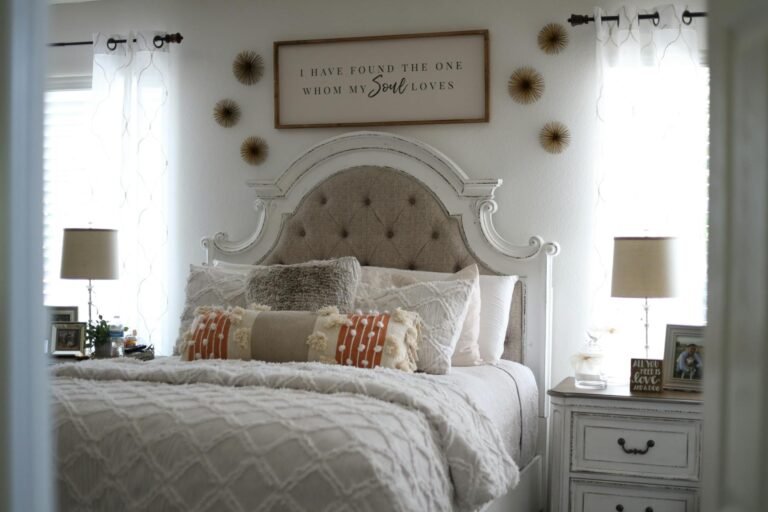
Cushions add the final texture layer to your bed—but only if arranged with intention. The formula that works for most beds: start with your sleeping pillows against the headboard, add one or two euro shams (larger decorative squares) in front, then finish with two or three smaller accent cushions in front of those.
Mix textures aggressively here. If your bedding is mostly smooth linen, your cushions should include velvet, bouclé, or embroidered fabrics. The cushion throw and rug layering principle applies: contrast creates interest. A bed with all-matching cushions looks like a catalogue shoot; a bed with mixed textures looks like someone actually lives there and has good taste.
#4 Best Texture Pop for Cushion Layering: Velvet Cushion Covers
Best for: Adding rich colour and tactile contrast | Price: (check current retailer pricing) per pair | Why we picked it: Affordable way to add depth and seasonal colour
Velvet cushion covers are the easiest upgrade in bedroom textile layering. The light-catching fabric adds visual depth that flat cotton simply can’t match, and because you’re buying covers rather than whole cushions, swapping colours seasonally costs very little. Keep your inserts, change the mood quarterly.
- ✓ Light-catching texture adds instant sophistication
- ✓ Hidden zip design keeps styling clean
- ✓ Affordable enough to buy multiple colours
- ✗ Shows pet hair and lint more than matte fabrics
Bottom line: May suit anyone building a layered cushion collection on a budget. Check the retailer for current pricing; per pair, you can afford to own sets in three or four colours and rotate with the seasons.
Browse matching options on Amazon AU · Browse matching options on Amazon US
Step 5: Anchor Everything with Rug Layering
A rug grounds your entire textile composition and prevents your carefully layered bed from floating in visual space. The rug doesn’t need to match your bedding—in fact, it shouldn’t match perfectly. What it needs to do is complement by picking up one colour from your palette while adding its own textural dimension.
For bedroom rug layering, place at least the first third of the rug under the bed (ideally half, if your rug is large enough). This creates connection between the bed and floor. A rug that stops short of the bed frame looks like an afterthought rather than a deliberate design choice. Natural fibre rugs like jute work particularly well because they add texture without competing with your bed’s colour story.
#5 Best Natural Foundation for Rug Layering: Jute Area Rug
Best for: Creating textural foundation without colour competition | Why we picked it: Neutral tone complements any colour scheme
Jute rugs bring that organic, earthy texture that makes bedrooms feel grounded and serene. The natural fibres add warmth underfoot without overwhelming your carefully considered colour palette. They’re the Switzerland of rug layering—neutral enough to work with everything, textured enough to matter.
- ✓ Natural fibres suit eco-conscious homes
- ✓ Neutral tone works with any colour scheme
- ✓ Durable weave handles bedroom foot traffic well
- ✗ Can feel rough on bare feet compared to wool
Bottom line: Ideal if you want your rug to enhance rather than dominate your textile layering. Check the retailer for current pricing; with 8×10 sizes working best for queen beds.
Browse matching options on Amazon AU · Browse matching options on Amazon US
Step 6: Apply the Rule of Three Textures
Every successful textile layering bedroom scheme includes at least three distinctly different textures. Your eye needs variety to stay interested, but too many textures create visual chaos. Three to five is the sweet spot.
A practical combination: smooth linen sheets (texture one), chunky knit throw (texture two), velvet cushions (texture three), and jute rug (texture four). Each texture reads differently from across the room, creating the depth that makes layered beds so appealing. If everything were the same smooth cotton, you’d have warmth but no visual interest.
Step 7: Consider Colour Temperature and Balance
Colour temperature affects how cosy your layered textiles feel. Warm whites, creams, terracotta, rust, and sage read as inviting and relaxing. Cool greys, bright whites, and blues feel fresher but slightly less hygge.
Neither is wrong—it depends on your bedroom’s light and your personal preference. North-facing rooms often benefit from warmer tones to counteract cool natural light. South-facing rooms can handle cooler tones without feeling clinical. The key is consistency: if your base is warm white linen, your throws and cushions should stay in the warm family rather than jumping to icy grey.
Step 8: Extend Layering to Your Sofa and Seating
The same principles that work for bedroom textile layering apply to your sofa and any bedroom seating. A reading chair with a throw draped over one arm and a textured cushion in the seat becomes an invitation rather than just furniture.
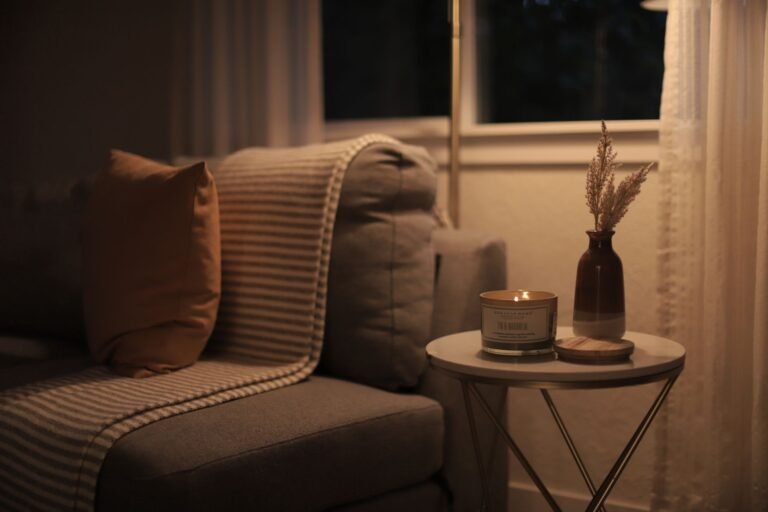
For sofa texture throw styling, the diagonal drape works beautifully—throw one corner over the back, let the rest cascade down the seat and onto the floor slightly. This looks intentional but not stiff. Pair with two or three cushions in varying sizes and textures, and your sofa suddenly looks like it belongs in an interiors magazine. For more ideas on creating the perfect reading spot, see our guide to cosy reading nook setups.
Step 9: Adjust Layers Seasonally
Your textile layering should shift with the seasons, not remain static year-round. Summer calls for lighter throws (cotton waffle weave, light linen), fewer cushions, and breathable layers. Winter invites the heavyweight crew: chunky knits, faux fur, velvet, and more cushions than you’d ever admit to owning.
Store off-season textiles in breathable cotton bags rather than plastic bins, which can trap moisture and create musty smells. Rotate your cushion covers and throws every few months to prevent uneven wear and keep your bedroom feeling fresh. If you’re considering adding more warmth to your layering, our guide to weighted blankets covers options that work beautifully in winter schemes.
Common Textile Layering Mistakes to Avoid
Matching everything exactly. A bed where the throw, cushions, and rug all come from the same coordinated set looks safe but boring. Intentional mismatching creates character.
Skipping the rug. Without a rug anchoring the space, even perfectly layered bedding can feel like it’s floating. The rug provides visual weight and grounds your composition.
Choosing form over function. Those beautiful silk cushions that can’t be sat on? The throw that sheds fibres everywhere? Skip them. The best textile layering bedroom setups are ones you actually want to use, not just photograph.
Ignoring scale. A tiny throw on a king bed looks like a dishcloth. A massive cushion on a twin looks absurd. Match your textile sizes to your furniture scale.
| Product | Best For | Key Feature | Ideal Room | Check Price |
|---|---|---|---|---|
| Linen Duvet Cover Set | Hotel-quality base layer | Gets softer with every wash | Master bedroom | Browse matching options on Amazon AU · Browse matching options on Amazon US |
| Chunky Knit Throw | Maximum texture impact | Oversized knit pattern | Bedroom or living room | Browse matching options on Amazon AU · Browse matching options on Amazon US |
| Faux Fur Throw | Budget-friendly luxury | Machine washable softness | Bedroom or sofa | Browse matching options on Amazon AU · Browse matching options on Amazon US |
| Velvet Cushion Covers | Colour and texture accent | Light-catching fabric | Bedroom or living room | Browse matching options on Amazon AU · Browse matching options on Amazon US |
| Jute Area Rug | Natural grounding layer | Neutral, versatile texture | Any bedroom | Browse matching options on Amazon AU · Browse matching options on Amazon US |
Frequently Asked Questions
What is the best throw blanket for bedroom textile layering?
A chunky knit throw typically delivers the most visual impact for bedroom layering because the oversized knit pattern creates dramatic texture visible from across the room. For a softer, more luxurious feel, faux fur throws work beautifully. The best choice depends on your existing textures—choose something distinctly different from your bedding for maximum contrast.
How many cushions should I layer on a bed?
For a queen or king bed, three to five decorative cushions (not counting sleeping pillows) creates a layered look without overwhelming the space. Start with two larger euro shams against the headboard, then add two or three smaller accent cushions in front. The odd number rule applies here—odd groupings typically look more intentional than even ones.
What textures work best together for layering textiles?
The most successful combinations contrast smooth with textured, matte with sheen. A practical formula: smooth linen base, chunky or waffle-weave throw, velvet cushions, and natural fibre rug. Aim for three to five distinctly different textures—fewer feels flat, more becomes chaotic.
How do I layer a throw blanket on a bed without it looking messy?
Fold your throw in thirds lengthwise, then drape it horizontally across the lower third of the bed. For a more casual look, drape diagonally from one corner. The key is making it look deliberately placed rather than accidentally dropped—crisp folds or intentional cascades, never bunched balls.
Can I use the same layering techniques on a sofa?
Absolutely—sofa texture throw layering follows the same principles. Drape a throw diagonally over one arm or the back, letting it cascade naturally. Add two or three cushions in varying sizes and textures. The diagonal drape works particularly well on sofas because it looks inviting without blocking seating.
When is the best time to buy bedroom textiles?
What rug size works best for bedroom layering?
For a queen bed, an 8×10 rug allows the rug to extend at least 2-3 feet on each side, creating balanced proportions. For king beds, consider 9×12. The rug should extend far enough that you step onto it when getting out of bed on both sides—this creates the grounding effect that anchors your entire textile composition.
Should bedroom textiles match exactly or coordinate?
Coordinate rather than match exactly. Perfectly matched sets from one collection look safe but often feel flat and catalogue-like. Instead, choose textiles that share a colour family or undertone while varying in texture and pattern. A cream linen duvet, oatmeal chunky throw, and ivory velvet cushions “go together” without being identical.
How often should I change my layered textiles?
Seasonally rotating accent pieces (throws and cushion covers) keeps your bedroom feeling fresh without major expense. Heavier textures like chunky knits and faux fur suit autumn through spring; lighter cotton and linen throws work beautifully in summer. Base layers like duvet covers can stay year-round if you’ve chosen quality neutral pieces.
Layering textiles in your bedroom transforms a functional sleeping space into a sanctuary that welcomes you at the end of every day. Start with quality base layers, add texture through throws and cushions, anchor with a rug that grounds the whole composition, and don’t be afraid to mix rather than match. The goal isn’t perfection—it’s creating a bed so inviting that leaving it every morning requires genuine willpower.
Featured image: Photo by Magda Ehlers on Pexels