Rental Outdoor Lighting: 7 Things to Check Before Buying
Disclosure: As an Amazon Associate, I earn from qualifying purchases. This post may contain affiliate links, which means I may earn a small commission at no extra cost to you. I only recommend products I genuinely think could help you create a cozier home.
You’ve found a rental with a balcony that actually gets evening sun, and now you’re picturing fairy lights, a few candles, maybe that solar lantern you saved on Pinterest. Before you fill a cart with outdoor lighting, there’s a checklist worth running through—because rental outdoor lighting comes with rules that can cost you your bond or leave you with a box of returns.
The good news: as a renter in Australia, you have more options than you might think. The catch is knowing which lights you can legally install yourself, which weather ratings actually matter for your specific balcony, and what measurements to take before ordering anything.
Quick Summary: What Renters Need to Know
- You can self-install: Solar-powered, battery-operated, low-voltage (12V), or plug-in lights only
- Minimum weather rating: IP65 for exposed areas; IP44 only for fully sheltered spots
- Measure first: Sunlight hours, shade sources, railing dimensions, and distance to neighbours
- Brightness guide: 100-200 lumens for pathways, 50-100 lumens for ambient string lights
- Avoid: Any hardwired installation—this requires a licensed electrician and landlord approval
What Australian Renters Can (and Can’t) Install Themselves
Only a licensed electrician can install mains-voltage outdoor lighting in Australia. This isn’t optional—it’s law, and your landlord will need to approve any permanent electrical work. The exception that matters for renters: low-voltage landscape lighting (typically 12V systems) can be self-installed, along with anything that doesn’t connect to your home’s wiring.
This means your rental outdoor lighting options are:
- Solar-powered lights — no electrical connection needed
- Battery-operated lights — completely portable and removable
- Low-voltage systems — usually 12V, plugs into a transformer
- Plug-in lights — if your balcony has an existing outdoor power point
Anything involving new wiring, mounting to walls with screws that damage surfaces, or connection to your home’s electrical circuit is off-limits without landlord permission and professional installation. This rule comes from AS/NZS 3000, the Australian electrical safety standard that governs all outdoor lighting installations.
IP Ratings: The Weather Number That Actually Matters
IP65 is the minimum acceptable standard for any outdoor lighting that will be exposed to rain. That two-digit number tells you exactly how much dust and water the light can handle—and getting it wrong means replacing lights every season instead of every few years.
The first digit (6 in IP65) indicates dust protection, where 6 means completely dust-tight. The second digit (5) indicates water resistance, where 5 means the light can handle water jets from any direction. For context, IP54 lights will accumulate dust on solar panels and experience water getting into the electronics within two to three years, according to industry solar lighting guides.
IP Rating Reference for Australian Conditions
| IP Rating | Protection Level | Suitable For |
|---|---|---|
| IP44 | Splash-resistant only | Fully covered balconies, under eaves |
| IP65 | Dust-tight, rain-resistant | Standard outdoor use, most balconies |
| IP66 | Powerful water jets | Coastal areas, storm-prone locations |
| IP67 | Brief submersion | Ground-level, flood-prone spots |
If you’re near the coast, IP66 provides better protection against salt spray. Dusty inland areas benefit from the complete dust sealing of IP6X ratings. When in doubt, go one rating higher than you think you need—the price difference is usually minimal, and the lifespan difference is significant.
Measurements to Take Before Ordering Anything
The difference between lights that work and lights that sit in a drawer is usually a measurement you didn’t take. Here’s the checklist:
Space Dimensions
- Balcony length and width — determines how many string light metres you need
- Railing width and depth — affects which clip-on or wrap-around options fit
- Height to ceiling or overhead structure — for hanging lights safely
- Distance to neighbours — relevant for light spill (more on this below)
Solar Panel Positioning (Critical for Solar Lights)
- Compass orientation — north-facing locations receive optimal sunlight in Australia
- Daily sunlight hours — solar lights need 6-8 hours of direct sun for full charging
- Shade sources — note where buildings, trees, or your own roof cast shadows during peak daylight
A balcony that feels sunny at 4pm might be in complete shade during the midday hours when solar panels charge most efficiently. Track your balcony’s light for a day before committing to solar options. If you’re already planning a small balcony setup for Australian spring, take these measurements at the same time.
How Many Lumens Do You Actually Need?
For ambient balcony lighting, 50-100 lumens per string light bulb creates atmosphere without overwhelming the space. Pathway lighting needs 100-200 lumens. Security floodlights run 1,200-3,000 lumens—but unless you’re illuminating a driveway, that level of brightness creates glare problems and neighbour complaints.
Lumen Guide by Use
| Light Type | Lumens Needed | Best For |
|---|---|---|
| String lights / fairy lights | 50-100 per bulb | Atmosphere, evening drinks |
| Path lights | 100-200 | Safe navigation |
| Table lanterns | 200-400 | Dining, reading outdoors |
| Wall-mounted ambient | 400-600 | General visibility |
Colour temperature matters too. A warm white between 2700K-3000K creates cosy residential atmosphere—the kind that makes you want to linger outside. Anything above 4000K starts looking institutional and can contribute to light pollution concerns addressed by Australian outdoor lighting regulations.
Light Spill Rules: Why Your Neighbours Matter
AS/NZS 4282:2019 addresses the control of obtrusive effects of outdoor lighting, including glare and light spill onto neighbouring properties. This standard is particularly relevant in dense residential areas, strata environments, and apartment buildings where balconies face each other.
Practically, this means:
- Point lights downward or toward your own space, not outward
- Avoid security-level brightness (1,500+ lumens) for ambient use
- Consider shielded fixtures that direct light where you want it
- Timer functions can prevent lights running all night
Your strata committee or landlord may have specific rules about outdoor lighting in common areas or visible balconies. Worth checking before you install anything prominent.
Materials: What Lasts vs. What Doesn’t
The housing material affects both durability and weight—important if you’re hanging lights from temporary hooks or resting them on railings.
Housing Materials Compared
| Material | Pros | Cons | Best For |
|---|---|---|---|
| Stainless Steel (316) | Corrosion resistant | Heavier, higher cost | Coastal rentals |
| Aluminium | Lightweight | Can oxidise | General outdoor |
| ABS Plastic | Affordable, light | UV degradation | Temporary/budget |
| Polycarbonate | Impact resistant | Can yellow | High-traffic spots |
Battery Types in Solar Lights
Lithium-ion batteries last longer and perform better in temperature extremes than older nickel-metal hydride (NiMH) types. Look for lights with replaceable batteries—sealed units mean replacing the entire light when the battery degrades, usually within 2-3 years.
Common Mistakes to Avoid
These are the errors that lead to returns, bond deductions, or lights that stop working after one season:
- Underestimating shade: Placing solar panels where buildings or trees cast shadows during peak charging hours (10am-2pm)
- Wrong IP rating for your exposure: Using IP44 lights in areas that get direct rain
- Ignoring light spill: Bright lights pointing toward neighbour windows or common areas
- Over-illuminating: Using security-level lumens (1,500+) for ambient atmosphere—creates glare, not cosiness
- Assuming “outdoor” means weatherproof: Some imported products rated for milder climates won’t handle Australian UV or storm conditions
- Choosing sealed batteries: Non-replaceable batteries mean the whole light becomes waste when batteries degrade
- Making permanent modifications: Any drilling, screwing into walls, or electrical work without landlord approval
The No-Purchase Alternative: What You Already Have
Before buying anything, consider what might already create the effect you want:
- Candles in glass jars — zero installation, completely removable (check fire rules for your building)
- Battery-operated tea lights — safe for windy balconies, often already in a drawer somewhere
- Reflective surfaces — a mirror or metallic planter can bounce existing light around
- Existing indoor lamps — if your balcony has a power point, an indoor lamp with weather protection during use might work temporarily
Sometimes the budget makeover approach that works indoors applies outdoors too—starting with what you have before adding new purchases.
Pre-Purchase Checklist for Rental Outdoor Lighting
Print this or save it to your phone before shopping:
✓ Before You Buy
- ☐ Measured balcony dimensions (length × width × height)
- ☐ Measured railing width/depth for clip-on options
- ☐ Tracked sunlight hours on intended solar panel location
- ☐ Noted shade sources during 10am-2pm
- ☐ Checked compass orientation (north-facing = best for solar)
- ☐ Confirmed IP rating is IP65 or higher for exposed areas
- ☐ Verified battery type is lithium and replaceable
- ☐ Checked strata/landlord rules on outdoor modifications
- ☐ Confirmed lights are completely removable (no screws, no wiring)
- ☐ Selected warm colour temperature (2700K-3000K)
Frequently Asked Questions
Can I install any outdoor lights myself in a rental property?
You can only self-install solar-powered, battery-operated, low-voltage (12V), or plug-in lights in Australian rentals. Any mains-voltage electrical work requires a licensed electrician and landlord approval. This applies regardless of how simple the installation seems.
What IP rating do I need for balcony lights?
IP65 is the minimum for any exposed outdoor location. If your balcony is fully covered and protected from driving rain, IP44 may suffice. Coastal areas benefit from IP66 for salt spray resistance.
How many hours of sun do solar lights need to charge?
Most solar outdoor lights need 6-8 hours of direct sunlight for a full charge. Partial shade significantly reduces charging efficiency, which is why measuring actual sunlight hours on your balcony matters before buying solar options.
How many lumens should balcony string lights have?
For ambient atmosphere, 50-100 lumens per bulb creates warm, inviting light without glare. Higher lumens (400+) are only needed if you’re trying to illuminate a space for tasks like outdoor dining or reading.
Will my landlord allow outdoor lights on the balcony?
Most landlords allow portable, non-permanent lighting that doesn’t damage surfaces or require electrical work. Solar stake lights, battery lanterns, and string lights that clip or hang without drilling are generally acceptable. Check your lease and strata rules for specific restrictions.
What’s the best battery type for solar outdoor lights?
Lithium-ion batteries outperform nickel-metal hydride (NiMH) in longevity and temperature tolerance. Look for lights with replaceable lithium batteries so you don’t need to replace the entire unit when battery performance degrades.
When is the best time to buy outdoor lighting?
End-of-summer sales (late February/March in Australia) often discount outdoor lighting as retailers clear seasonal stock. Spring is when selection is broadest, but you’ll pay full retail. Off-season shopping typically offers better value.
Do I need to worry about light spill to neighbours?
Yes—Australian standard AS/NZS 4282:2019 addresses obtrusive outdoor lighting effects. In apartments and strata properties, bright lights that shine into neighbouring units can trigger complaints. Point lights downward, choose warm colour temperatures, and avoid security-level brightness for ambient use.
How long do solar outdoor lights typically last?
With proper IP ratings and quality construction, solar lights last 3-5 years before battery degradation affects performance. Cheaper models with sealed batteries or inadequate weather protection often fail within 1-2 seasons, making the initial savings less worthwhile.
Rental outdoor lighting doesn’t have to be complicated—it just requires a bit of homework upfront. Measure your space, check the IP rating matches your exposure level, and stick to options that leave no trace when you move out. Your balcony evenings (and your bond) will thank you.
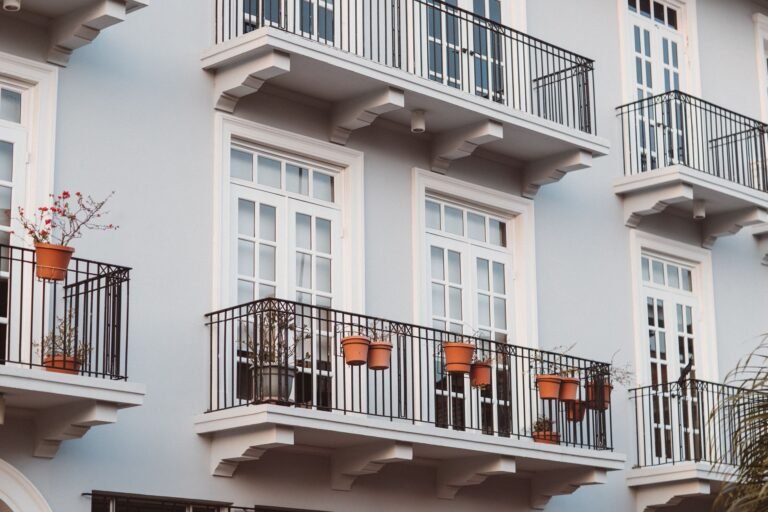
Styling inspiration; not a photograph of the recommended products. Photo by Juan Pablo Serrano on Pexels