Small Balcony Setup for Australian Spring: Measure First
Disclosure: As an Amazon Associate, I earn from qualifying purchases. This post may contain affiliate links, which means I may earn a small commission at no extra cost to you. I only recommend products I genuinely think could help you create a cozier home.
A small balcony setup works best when you measure your actual space before browsing furniture online. The difference between a balcony that feels like an outdoor room and one cluttered with returns-pending purchases? It’s about 90 seconds with a tape measure. Australian apartment balconies typically range from 4 to 6 feet wide and 6 to 10 feet deep—dimensions that sound generous until you factor in door swing, chair pull-back, and that drainage outlet tucked in the corner.
Quick Takeaways
- Measure balcony width, depth, and door clearance before shopping—standard bistro tables need 60–66 inches total depth
- Australian balconies typically support 200 kg/m²—check your strata by-laws before adding heavy planters
- Pots over 30L often must sit inside the balustrade line, not on or over it
- Aluminium and synthetic wicker suit Australian weather with minimal maintenance
- Mark furniture positions with painter’s tape first to test walkways and door swing
The Four Measurements You Need Before Shopping
Knowing your balcony dimensions prevents the frustration of furniture that technically fits but leaves no room to move. Grab a tape measure and note these four numbers:
1. Total Width and Depth
Measure wall-to-wall and wall-to-balustrade. Most residential balconies fall between 4–6 feet wide and 6–10 feet deep, though older apartments can surprise you in either direction. A balcony should have a minimum depth of around 4 feet to be genuinely usable—anything less becomes a glorified shelf.
2. Door Clearance
Open your balcony door fully and measure from the door’s outer edge to the opposite side of the balcony. This clearance dictates where furniture can actually go. A sliding door eats less space; a swing door needs a full arc left empty.
3. Chair Pull-Back Space
Chairs typically need 45–60 cm of pull-back space to sit down comfortably. Add another 60–90 cm for a walkway behind the chair if you want to squeeze past someone sitting. Here’s the quick formula: table depth + chair clearance + walkway = minimum balcony depth needed. A 60 cm bistro table needs roughly 150–170 cm total depth.
4. Fixed Obstacles
Note the position of drainage outlets, external taps, and any structural elements like air conditioning units. Pots cannot block drainage outlets under most strata rules—and you’ll curse yourself in the first heavy spring rain if you forget this one.
Balcony Size to Furniture Match
Not every balcony can handle a conversation set, and that’s fine. Here’s a realistic guide to what fits where:
| Balcony Size | What Actually Fits |
|---|---|
| 4×8 ft (1.2×2.4 m) | Bistro set (2 chairs + small table) or single lounge chair |
| 5×8 ft (1.5×2.4 m) | Bistro set + one compact accent chair or plant stand |
| 5×10 ft (1.5×3 m) | Loveseat or small two-seater with side table |
| 6×10 ft (1.8×3 m) | Compact 3-piece patio set with room for planters |
Weight Load Considerations for Australian Apartments
Australian balconies are designed to the National Construction Code with a typical residential live load of 2 kPa—roughly 200 kg per square metre. That sounds like plenty until you start adding wet planters. A 60-litre planter at full saturation weighs approximately 80 kg. Three of them along a balustrade creates a quarter-tonne point load on the slab edge.
Common Strata Planter Rules
- Pots over 30 litres often must sit on the inside line of the balustrade, not on or over it
- Drip trays are typically required and must be emptied regularly
- No planters hung on the outside face of the balustrade
- Planters cannot block drainage outlets
Action step: Check your strata by-laws and building documentation before buying large planters or heavy furniture. Total planted weight on the balcony must not exceed scheme-specific limits without engineering certification, according to UnitBuddy’s guide to strata balcony rules.
Which Materials Actually Suit Australian Conditions
Powder-coated aluminium and quality synthetic wicker handle Australian spring weather with minimal fuss. Here’s what to look for—and what to avoid:
| Material | Weather Resistance | Maintenance | Weight | Lifespan |
|---|---|---|---|---|
| Powder-coated aluminium | High | Low (wipe clean) | Light | 15–25+ years |
| Synthetic wicker (HDPE) | Medium–High | Low | Light–Medium | 10–20 years |
| Teak/hardwood | High | Medium (annual oil) | Medium | 25+ years |
| Steel/iron | Medium | High (rust touch-ups) | Heavy | 10–20 years |
Material Notes
Aluminium resists rust and stays cooler than steel in direct sun—worth noting for north-facing balconies. Its light weight makes rearranging easy but may require securing in windy spots.
Synthetic wicker (look for HDPE resin specifically) handles moisture and UV exposure well. Avoid natural wicker outdoors—it deteriorates quickly in Australian conditions. Check the frame material too; aluminium frames outlast steel.
Steel and iron provide stability in wind but absorb heat readily. Budget for rust touch-ups every year or two, especially in coastal areas.
Rental-Friendly Setup Steps
If you’re renting, you want a small balcony setup that’s portable, non-damaging, and doesn’t violate your lease. Here’s a practical approach:
Step 1: Test Layout With Painter’s Tape
Mark furniture footprints on the floor with painter’s tape before purchasing. Sit in imaginary chairs. Open the door. Walk the tape outline. This five-minute exercise prevents expensive mistakes.
Step 2: Choose Stackable or Foldable Pieces
Foldable bistro chairs store flat against a wall when you need balcony space for other activities. Stackable stools serve as seating or plant stands. Both pack easily when you move.
Step 3: Use Freestanding Plant Solutions
Instead of drilling into balustrades or walls, use weighted pot bases, freestanding plant stands, or floor planters. Hanging planters on shepherd’s hooks work if your balcony has sufficient weight capacity—check before loading them up.
Step 4: Add Lighting Without Wiring
Solar-powered string lights or battery-operated lanterns create atmosphere without modifying electrical systems. Position solar panels where they’ll catch afternoon sun.
The No-Purchase Alternative: Work With What You Have
Before buying anything, try this: bring out a dining chair and a small side table you already own. Spend a few mornings having coffee on the balcony. You’ll learn which direction gets morning sun, how wind affects the space, and whether you actually want to sit there. A week of real use tells you more than an hour of online shopping.
If your existing furniture survives spring showers, you may not need weather-resistant pieces at all—just bring them in when rain threatens. (This is genuinely how plenty of Australians manage small balconies, and it works.)
Common Mistakes to Avoid
- Buying before measuring door clearance — Furniture that fits the balcony but won’t pass through your door is a special kind of frustrating
- Ignoring drainage — Spring storms happen fast; blocked drains mean indoor flooding
- Overloading with planters — Three large wet pots can exceed edge load limits; distribute weight toward the building side
- Choosing natural wicker for Australian weather — It looks lovely for one season, then disintegrates
- Forgetting vertical space — Wall-mounted shelves and tall plant stands use space that floor furniture can’t
A Practical Measurement Checklist
Print this or save it to your phone before shopping:
- □ Balcony width: _____ cm
- □ Balcony depth: _____ cm
- □ Door clearance when fully open: _____ cm
- □ Door swing type: sliding / hinged left / hinged right
- □ Distance from balustrade to drainage outlet: _____ cm
- □ Fixed obstacles (AC unit, tap, etc.): _____
- □ Strata weight limit confirmed: yes / no / need to check
- □ Strata planter rules reviewed: yes / no
If you’re planning a broader home refresh this season, our guide to transitioning decor between seasons covers how to carry that spring feeling indoors.
Frequently Asked Questions
What size furniture fits a 4×8 foot balcony?
A 4×8 foot balcony comfortably fits a bistro set with a table diameter of 45–60 cm and two compact chairs. Deep-seated lounge chairs typically won’t leave room for a walkway. Measure your specific space and test layouts with painter’s tape before purchasing.
How do I know if my balcony can support heavy planters?
Australian residential balconies are typically designed to support 200 kg per square metre. However, point loads at slab edges (like planters along a balustrade) create more stress than distributed loads. Check your strata by-laws for scheme-specific limits—many require pots over 30 litres to sit inside the balustrade line.
What’s the best outdoor furniture material for Australian weather?
Powder-coated aluminium and HDPE synthetic wicker offer the best combination of weather resistance and low maintenance for Australian conditions. Aluminium stays cooler in sun than steel and won’t rust. Quality synthetic wicker handles UV exposure without fading as quickly as natural materials.
Can I put outdoor furniture on a rental balcony?
Yes, freestanding furniture is generally fine on rental balconies. Avoid anything that requires drilling or permanent modifications. Choose lightweight, foldable pieces that pack easily when you move. Check your lease for any specific balcony restrictions before setting up.
When is the best time to buy outdoor balcony furniture in Australia?
End-of-season sales in late autumn (April–May) typically offer the best selection of discounted outdoor furniture. Spring brings new stock but also higher demand. If you need furniture immediately, mid-week shopping often means less competition for popular pieces.
How much space do I need behind a balcony chair?
Plan for 45–60 cm of pull-back space to sit down comfortably, plus another 60–90 cm if you want a walkway behind the chair. A bistro table plus two chairs needs roughly 150–170 cm of total depth to function properly.
What should I check before buying synthetic wicker furniture?
Look for HDPE (high-density polyethylene) resin construction rather than PVC or unspecified plastic. Check the frame material—aluminium frames last longer than steel in humid conditions. Confirm it’s genuinely synthetic, not natural wicker mislabelled, as natural wicker deteriorates rapidly outdoors.
Do I need drip trays under balcony plants?
Most Australian strata schemes require drip trays under all balcony planters, and they must be emptied regularly. Even if not required, trays protect balcony surfaces and prevent runoff staining neighbours’ balconies below. Spring watering means more frequent emptying.
How do I secure light furniture on a windy balcony?
Aluminium furniture can shift or tip in strong winds. Options include furniture weights designed to attach to chair and table legs, strategic placement against walls, or bringing lightweight pieces inside during storms. Heavier steel furniture stays put but trades off portability and may rust without maintenance.
A small balcony setup that actually works starts with those measurements tucked in your phone. Take five minutes, jot down the numbers, and you’ll shop with confidence instead of hope. Spring balcony coffee awaits.
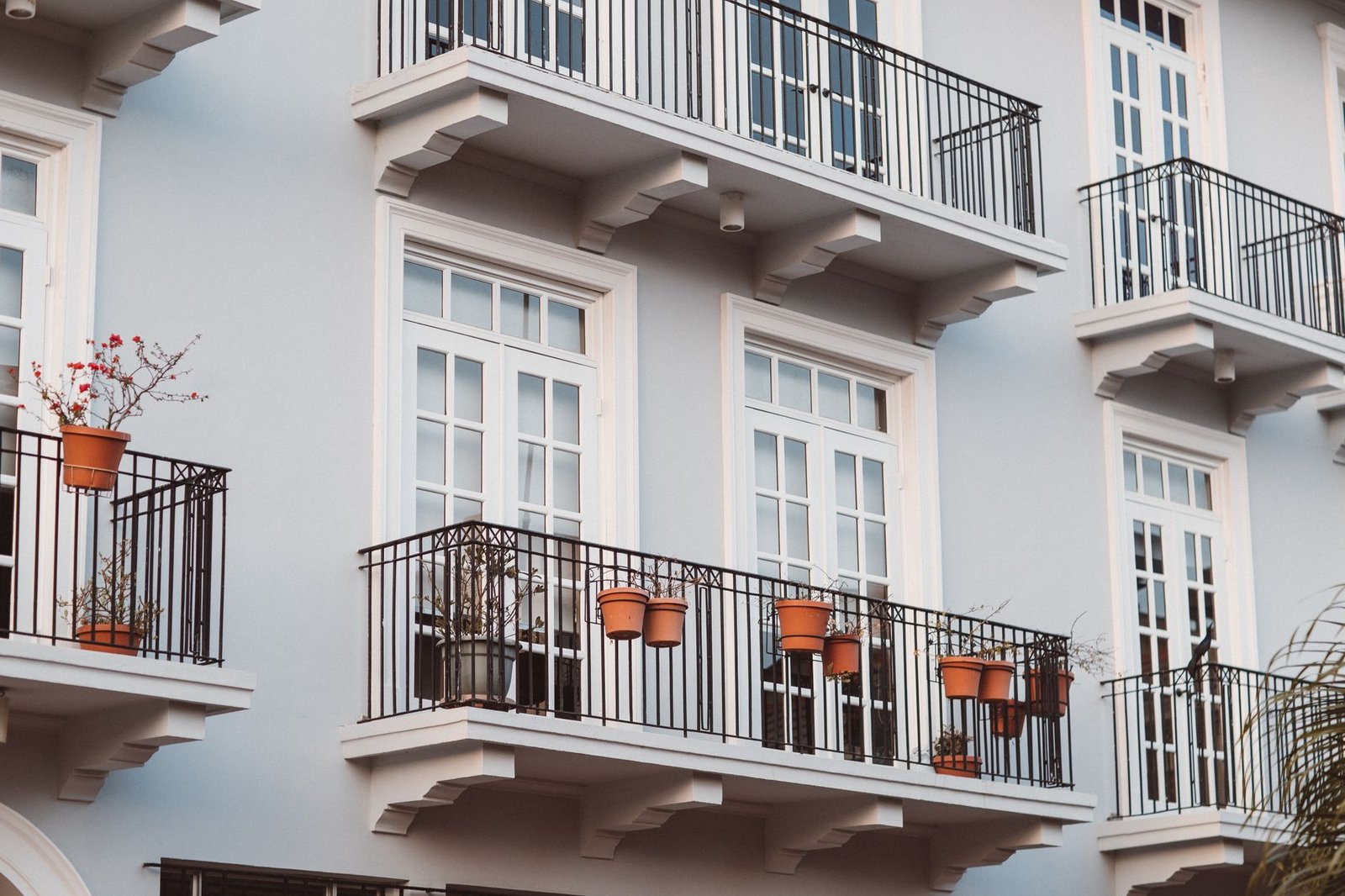
Styling inspiration; not a photograph of the recommended products. Photo by Luis Quintero on Pexels