Ultimate Rug Size Guide: 7 Essential Tips for Every Room
Disclosure: As an Amazon Associate, I earn from qualifying purchases. This post may contain affiliate links, which means I may earn a small commission at no extra cost to you. I only recommend products I genuinely think could help you create a cozier home.
How to use this guide: Recommendations describe product types and buying considerations, not hands-on tests of a specific model. Search links show matching options in Australia and the US. Check the seller’s dimensions, materials, instructions and current pricing before buying. See our editorial approach.
A rug that’s too small makes your furniture look like it’s floating on an island — awkward, disconnected, and somehow making even a well-decorated room feel unfinished. Learning how to choose rug size correctly is the difference between a space that feels considered and one that never quite comes together. The good news? It’s not complicated once you know the basic rules.
Quick Rug Sizing Guide
- Living room: All front furniture legs on the rug, or all legs completely on (8×10 or 9×12 for most rooms)
- Bedroom: Rug should extend 18-24 inches beyond the sides of your bed
- Dining room: Add 24 inches to each side of your table for chair movement
- Measure first: Use painter’s tape to outline potential rug dimensions before buying
- When in doubt: Go bigger — an oversized rug rarely looks wrong, but too small always does
The Golden Rule of Rug Sizing (And Why Most People Get It Wrong)
Most rugs purchased online get returned because they’re too small, not too large. The instinct to “play it safe” with a smaller size backfires because rugs need to anchor furniture, not float beneath it. A properly sized rug creates visual cohesion — your eye reads the furniture grouping as one intentional arrangement rather than random pieces scattered across a floor.
The simplest test: if your rug looks like it’s trying to hide under your coffee table, it’s too small. You want generous borders of rug visible around your furniture, creating a frame that grounds the entire seating area.
Living Room Rug Size: The Placement Formulas That Actually Work
For living rooms, you have three reliable placement options that work in virtually any space. The “all legs on” approach places your entire seating arrangement — sofa, chairs, coffee table — fully on the rug, requiring the largest size (typically 9×12 or larger). This creates the most cohesive look and works beautifully in open-plan spaces where you need to define zones.
The “front legs only” method is the most popular compromise. Position your sofa and chairs so their front legs rest on the rug while back legs stay on the floor. An 8×10 rug handles most standard living room arrangements with this placement. The coffee table should sit entirely on the rug, with at least 18 inches of rug visible beyond it on all sides.
For smaller spaces or accent areas, the “no legs” approach works when you centre a rug under your coffee table only, using it as a decorative focal point rather than an anchor. This suits 5×7 or 6×9 rugs in compact living rooms.
Bedroom Rug Size Tips: Creating That Barefoot Moment
The purpose of a bedroom rug is simple: your feet should land on something soft when you swing your legs out of bed each morning. This determines everything about placement and size. For a queen bed, an 8×10 rug placed horizontally under the lower two-thirds of the bed gives you 18-24 inches of rug on each side — enough for that cozy barefoot landing.
King beds need a 9×12 rug for the same effect. If budget or space constraints matter, two matching runners (2.5×8 feet each) placed on either side of the bed achieve the same barefoot comfort without the cost of a large area rug.
Leave 8-12 inches of exposed floor between the rug edge and your bedroom walls. This prevents the rug from overwhelming the room while still creating that layered, considered look that makes a bedroom feel like a retreat rather than just a room with a bed in it.
Dining Room Measurements: The Chair Push-Back Test
Dining room rugs follow one non-negotiable rule: chairs must remain on the rug even when pushed back from the table. Add 24 inches (or 30 inches for generous comfort) to each side of your dining table dimensions. A 42×72 inch table needs at minimum a 7×10 rug, though an 8×10 provides more graceful proportions.
Round dining tables follow the same logic — a 48-inch diameter table needs at least a 7-foot round rug, preferably 8 feet. Nothing disrupts a meal quite like chair legs catching on rug edges every time someone shifts in their seat.
How to Measure Your Space Before Buying
Painter’s tape costs less than return shipping on a wrong-sized rug. Outline your intended rug dimensions directly on your floor and live with it for a day. Walk around the taped area, arrange your furniture according to plan, and notice whether the proportions feel right.
Measure your room’s total dimensions, then subtract 12-18 inches on each side to determine your maximum rug size — this leaves enough exposed flooring to prevent the rug from overwhelming the space. For irregular rooms, focus on the furniture arrangement rather than wall dimensions. The rug serves the seating area, not the architecture.
According to the design experts at Houzz, measuring diagonally across your furniture grouping gives you the minimum rug width needed to anchor the arrangement properly.
Standard Rug Sizes and Where They Work Best
Understanding common rug dimensions saves time when shopping. Here’s a practical breakdown of what fits where:
- 5×7 feet: Small living rooms, apartment seating areas, bedside (twin/full beds), or layered over larger rugs as an accent
- 6×9 feet: Studio apartments, compact dining rooms (4-person tables), or queen bed surround with front-legs-only furniture placement
- 8×10 feet: The workhorse size — fits most standard living rooms, queen bedrooms, and 6-person dining tables
- 9×12 feet: Large living rooms, king bedrooms, 8-person dining tables, or open-concept spaces needing zone definition
- 10×14 and larger: Great rooms, oversized primary bedrooms, or formal living rooms where the rug should dominate as a design feature
The Rug Pad Question (Yes, You Need One)
A rug pad isn’t optional — it’s the difference between a rug that stays put and one that bunches, slides, and wears out prematurely. Quality pads add cushioning underfoot, extend your rug’s lifespan by reducing friction with the floor, and prevent slipping hazards. Cut your pad 1 inch smaller than your rug on all sides so it remains invisible.
For hardwood or tile floors, felt-and-rubber combination pads grip without leaving residue. Low-pile rugs benefit from thicker pads (1/4 inch) that add plushness, while high-pile or shag rugs need thinner pads that don’t create excess height.
#1 Best Large Format for Spacious Living Rooms: Large Area Rug 8X10
Best for: Anchoring full seating arrangements | Why we picked it: Versatile dimensions fit most standard living rooms
An 8×10 rug handles the majority of living room configurations with ease. This size accommodates front-legs-only placement for a standard sofa-and-two-chairs arrangement while leaving appropriate border space. Worth considering if you’ve measured your room and it falls in the 12×15 to 14×18 foot range.
- ✓ Fits under coffee table with generous visible borders
- ✓ Works with both L-shaped sectionals and traditional seating
- ✓ Standard size means more style options to choose from
- ✗ May feel undersized in open-concept or great room layouts
Bottom line: The 8×10 format suits most homes with standard living room proportions. If your room measures under 14×18 feet and you prefer front-legs-only placement, this size typically runs (check current retailer pricing) depending on material and construction.
Browse matching options on Amazon AU · Browse matching options on Amazon US
#2 Best Natural Texture for Layered Looks: Jute Rug Natural
Best for: Adding organic texture to neutral spaces | Why we picked it: Earthy woven texture that complements any style
Natural jute brings warmth and texture without committing to a specific colour palette — it works in coastal, farmhouse, bohemian, and minimalist spaces equally well. The woven construction adds visual interest underfoot while playing well with other textures in layered rug arrangements. A practical option for high-traffic areas where you want durability without worrying about stain patterns.
- ✓ Neutral tone coordinates with virtually any decor style
- ✓ Sustainable natural fibre with inherent durability
- ✓ Excellent base layer for smaller accent rugs
- ✗ Can feel rough underfoot without a softer rug layered on top
Bottom line: Jute rugs suit anyone wanting to add organic warmth without colour commitment. Ideal for layering or standalone use in casual living spaces, typically priced (check current retailer pricing) for an 8×10.
Browse matching options on Amazon AU · Browse matching options on Amazon US
#3 Best Handwoven Option for Cozy Bedrooms: Large Woven Cotton Rug
Best for: Anchoring living rooms with soft warmth underfoot | Why we picked it: Handwoven texture adds artisan character
A cotton-jute blend offers the best of both worlds — the durability and earthiness of jute with the softer hand-feel of cotton. The handwoven construction means slight variations in texture and tone, giving each rug individual character that machine-made options lack. Works beautifully in bedrooms where you want both visual warmth and physical comfort underfoot.
- ✓ Softer underfoot than pure jute constructions
- ✓ Neutral tones suit bedrooms and living rooms equally
- ✓ Machine washable in many cases for easy care
- ✗ May show wear patterns in extremely high-traffic areas
Bottom line: Perfect for those wanting handcrafted character with more softness than natural jute provides. A great bedroom rug size option when positioned under the lower portion of a queen or king bed, check the retailer for current pricing;
Browse matching options on Amazon AU · Browse matching options on Amazon US
#4 Best Essential Accessory for Any Rug: Non-Slip Rug Pad
Best for: Keeping rugs secure on hard floors | Why we picked it: Prevents slipping while extending rug lifespan
The unsung hero of any rug setup. A quality pad prevents that frustrating bunching and sliding that makes even beautiful rugs feel sloppy. Beyond safety, pads add cushioning that makes thin rugs feel more luxurious and protect both your rug and flooring from friction damage. Consider this a required purchase alongside any area rug.
- ✓ Adds cushioned comfort to flat-weave rugs
- ✓ Protects hardwood floors from scratches and marks
- ✓ Extends rug life by reducing fibre friction
- ✗ Must be trimmed to size — cut 1 inch smaller than rug
Bottom line: Non-negotiable for any rug on hard flooring. Protects your investment while adding comfort and safety. Budget (check current retailer pricing) for an 8×10 size — trim it yourself for a perfect fit.
Browse matching options on Amazon AU · Browse matching options on Amazon US
| Product | Best For | Key Feature | Ideal Room | Check Price |
|---|---|---|---|---|
| Large Area Rug 8X10 | Full seating arrangements | Versatile standard size | Living room | Browse matching options on Amazon AU · Browse matching options on Amazon US |
| Jute Rug Natural | Layered and textured looks | Organic woven texture | Living room, entryway | Browse matching options on Amazon AU · Browse matching options on Amazon US |
| Large Woven Cotton Rug | Soft warmth underfoot | Handwoven cotton-jute blend | Bedroom | Browse matching options on Amazon AU · Browse matching options on Amazon US |
| Non-Slip Rug Pad | Safety on hard floors | Prevents sliding and bunching | Any room with hard flooring | Browse matching options on Amazon AU · Browse matching options on Amazon US |
Frequently Asked Questions
What size rug do I need for a living room with a sectional?
For sectionals, measure the full length and depth of your seating arrangement and add 12-18 inches to each dimension. Most L-shaped sectionals require a minimum 9×12 rug for front-legs-only placement, or a 10×14 for all-legs-on placement. The rug should extend at least 6 inches beyond each end of the sectional to avoid a cramped appearance.
Is an 8×10 rug big enough for a queen bed?
Yes, an 8×10 works well for queen beds when positioned horizontally with the top edge tucked under the lower third of the bed. This placement gives you approximately 18-24 inches of rug on each side of the bed — enough for comfortable barefoot landings each morning. Position it so equal amounts of rug extend beyond the foot and each side.
How much should a rug cost for different sizes?
Budget-friendly synthetic rugs in standard sizes typically run (check current retailer pricing) for 5×7, (check current retailer pricing) for 8×10, and (check current retailer pricing) for 9×12. Natural fibre rugs like jute or wool cost more — expect (check current retailer pricing) for 8×10 in jute, and (check current retailer pricing)+ for comparable wool rugs. Handwoven or artisan rugs command premium prices but offer unique character and longevity.
When is the best time to buy area rugs on sale?
Should the rug be bigger than the sofa?
Your rug should extend at least 6-12 inches beyond each end of your sofa to create balanced proportions. A rug narrower than your sofa looks truncated and interrupts visual flow. If your sofa is 84 inches wide, aim for a rug at least 96 inches (8 feet) wide — this allows the front legs of side chairs to rest on the rug as well.
Do I need a rug pad on carpet?
Rug pads on carpet serve different purposes than on hard floors — they prevent the top rug from shifting and bunching rather than protecting flooring. A thin, non-slip mesh pad works well for keeping area rugs stable on wall-to-wall carpet. Skip the thick cushioned pads, which can create instability and an oddly raised appearance.
What shape rug works best in a square room?
Square rooms can handle either rectangular or square rugs depending on furniture placement. If your furniture creates a rectangular conversation area, use a rectangular rug to match. For rooms with central seating arrangements (like a square coffee table with chairs on all sides), a square or round rug creates better visual harmony.
How far should a rug be from the wall?
Leave 8-18 inches of exposed floor between your rug edges and the walls, depending on room size. In smaller rooms, 8-12 inches prevents the rug from overwhelming the space. Larger rooms can handle 12-18 inches. Consistency matters most — aim for roughly equal spacing on all sides for a polished, intentional look.
Can you layer two different sized rugs together?
Layering rugs creates visual depth and allows you to add pattern or colour without committing to one large statement piece. The base rug should be larger and neutral (jute works beautifully), with a smaller accent rug featuring your pattern or texture on top. The top rug should be about 60-70% the size of the base rug for balanced proportions.
Getting your rug size right is one of those details that makes an immediate difference — the kind of change visitors notice without knowing exactly why your room feels so pulled-together. Take the time to measure, test with painter’s tape, and err on the side of going larger. Your furniture will finally look grounded, your space will feel intentional, and you’ll wonder why you ever tried to make that 5×7 work in your living room. (We’ve all been there.)
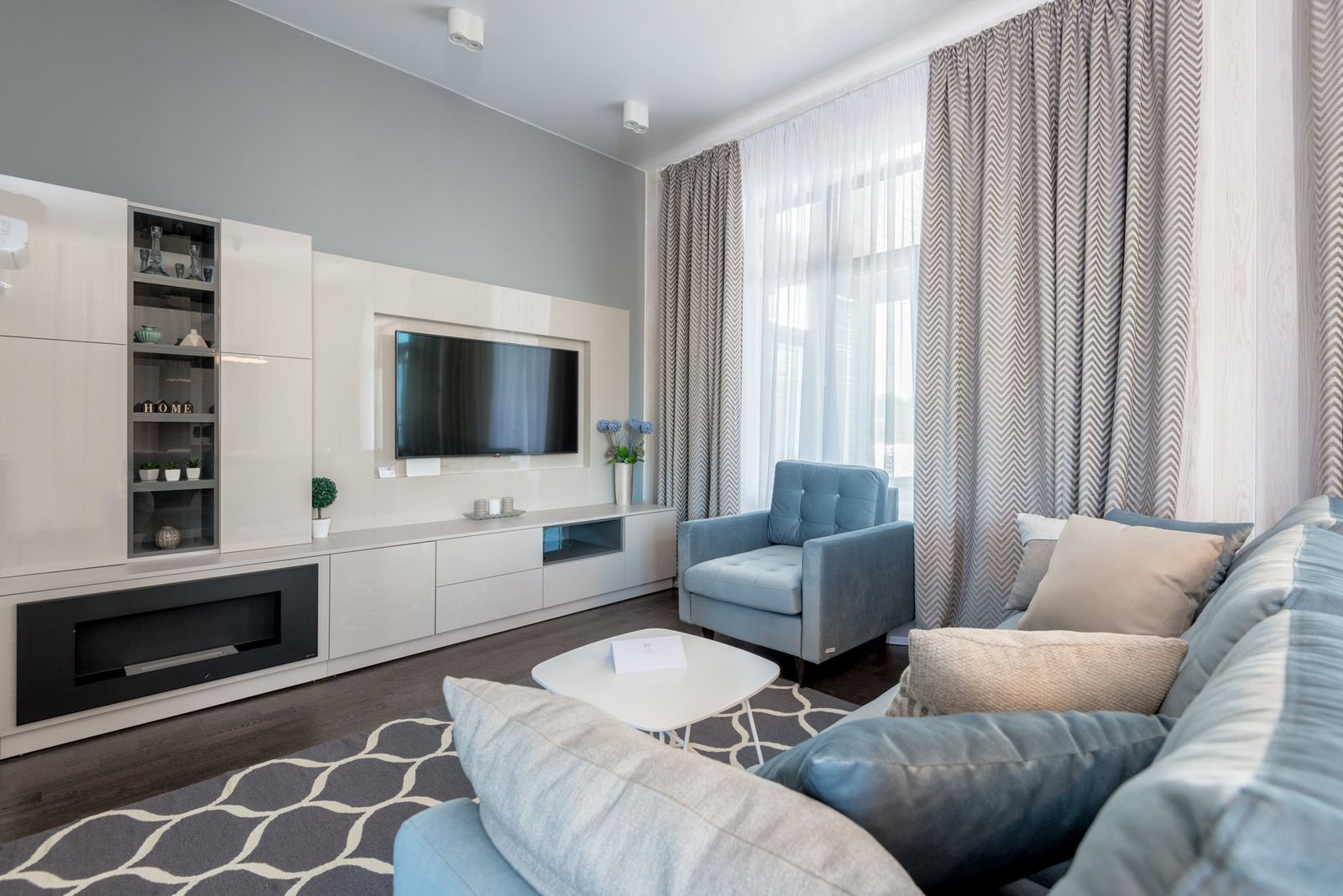
Featured image: Photo by Max Vakhtbovych on Pexels